Ban Lead Paint

Lead Free Paint

Background

ESDO has been working since 2008, from awareness-raising activities to policy advocacy on the issue of ‘Ban Lead Paint‘ in Bangladesh. In 2013 & 2015, ESDO with IPEN and EU funding, conducted rigorous research and studies.
According to the national report of ESDO on “Lead in Paint- 2013”; within this year leading paint brands in Bangladesh with a major market share had largely stopped producing paints containing more than 600 parts per million (ppm) lead.

  • All relevant government ministries have discussed and reviewed draft guidelines for a 50 ppm and complete lead paint elimination.
  • In 2015, the Director-General of Bangladesh Standards and Testing Institution (BSTI) told ESDO in a meeting that it would enforce a 50-ppm mandatory standard for lead in household enamel.
  • In 2018, Bangladesh Standard and Testing Institute (BSTI) has finalized a standard for the paint manufacturing industry, setting the limit of harmful lead content for household paint at a maximum of 90 ppm (parts per million), which makes Bangladesh the only country with a mandatory standard on Lead Paint in Southeast Asia.

As of September 30, 2019, 73 countries have legally binding controls to limit the production, import, and sale of lead paints, which is 38% of all countries. 90-ppm total lead is the concentration limit recommended by the “Model Law and Guidance for Regulating Lead Paint”. The lowest, most protective regulatory limit for lead paints has been set in some countries. Nine countries (23%) in the Asia and Pacific Region have lead paint laws. To combat lead poisoning and use, the Lead in Paint Component of the SAICM/GEF Project promotes regulatory and voluntary action by the government and industry to phase out lead in paint.

Updates from Paint Manufacturing Association:

As per the SRO for Paint Supply and Marketing BSTI CM, certification is mandatory, and the Bangladesh Paint Manufacturing Association has taken the initiative not to use lead in decorative paints, advised all of the BPMA members to stop using lead content material in decorative paints, and advised them to apply for BSTI CM license. In this regard, all the active members applied for BSTI CM license, and a maximum of manufacturers have submitted the paint sample for testing purposes for CM licensing. Major Market Players have received the CM License after qualifying the paint sample tested by BSTI to meet the setup of the Decorative Paints Standard. Therefore, in Conclusion, it is mentioned that the Bangladesh Paint Manufacturing Association has led to the stop to the use of lead-content materials in decorative paints, and BSTI is the main monitoring institute to protect to use of lead-containing materials in decorative paints. FOR BSTI CM LICENSE LEAD is prohibited to use in Decorative paints.

Chemical Composition:
Many older homes have indoor or outdoor surfaces coated with lead-based paint. White lead, or lead (II) carbonate (PbCO3), is a typical example and was once widely used to paint wooden surfaces in homes. Other lead compounds, like vivid yellow lead chromate (PbCrO4), are used as colored pigments

Initiatives:
Every year since 2012, from 20th-26th October ESDO, has been observing International Lead Poisoning Prevention Week of Action (ILPPPW) by conducting different types youth youth-involved competitions, human chain, and round table meetings with relevant stakeholders and associations. In this International Lead Poisoning Prevention Week (ILPPW), ESDO tries to raise awareness and promotes action to address the human health effects of lead exposure, especially for children. During the week, government, academicians, industry, and civil society advance efforts to prevent childhood lead poisoning, and special laws to eliminate lead in paint.

In 2020, ESDO with IPEN started another round of paint sample testing activity to assess the current situation of paints and what is the update of concentration after the mandatory law.

International Lead Poisoning Prevention Week – 2021

ESDO will observe the ILPPW-2021 with great enthusiasm every year by organizing a human chain in the last week of October in front of the national press club and other important places in Dhaka city and a round table meeting at the ESDO Head office or Department of Environment auditorium. This year, we have planned to celebrate the week in three separate ways. This year we will organize a PowerPoint presentation competition among the young generation (University Students) and a virtual webinar to engage them with our campaign and to make them aware of lead poisoning. After that, we will organize a Human Chain with 50 volunteers and the ESDO team. At the end of the week, we will organize a stakeholder meeting with the government and paint manufacturer authorities.

Specific Objectives:
• Pushing for legislation to ban leaded paint both in production, import, and sale. ESDO wants a total ban on leaded paints because that was our primary motto to eliminate lead paint. We are sticking to that point and we just achieved one hurdle, which is about the standard only on decorative paint. The final hurdle for us to achieve a total ban is that there is no lead for all types of paint and legislation on it.
• Raising awareness about the health effects of lead poisoning.

Date and Location:
20 October to 30 October 2021. Around Dhaka city, Bangladesh.

International Lead Poisoning Prevention Week – 2022

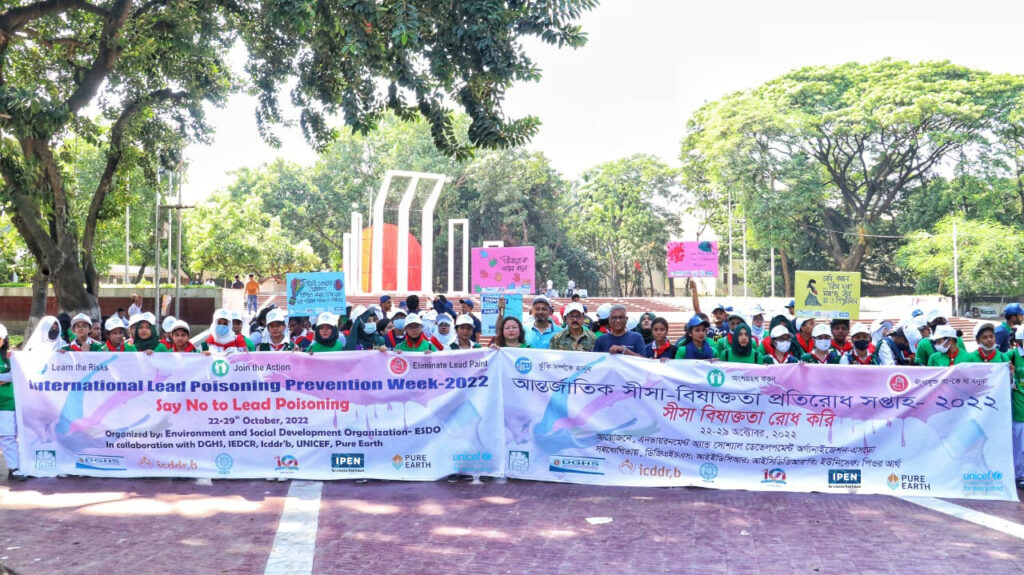
On the occasion of International Lead Poisoning Prevention Week 2022, Environment and Social Development Organization-ESDO, in collaboration with DGHS, Icddr’b, IEDCR, Pure Earth, UNICEF Bangladesh, and IPEN organized a human chain alongside a rally on October 22 to call for the complete banning of all lead-based paint in Bangladesh and the proper implementation of the existing law.

Around 120 volunteers from Girls’ Guide, Green Voice, and students of different universities participated in this human chain and rally. Representatives from Icddr’b, Pure Earth, and, UNICEF Bangladesh were also present at the occasion.

The human chain started in front of the National Press Club, continued as a rally toward the High Court and TSC, and then ended with another human chain at the Central Shaheed Minar.
International Lead Poisoning Prevention Week 2022 ESDO

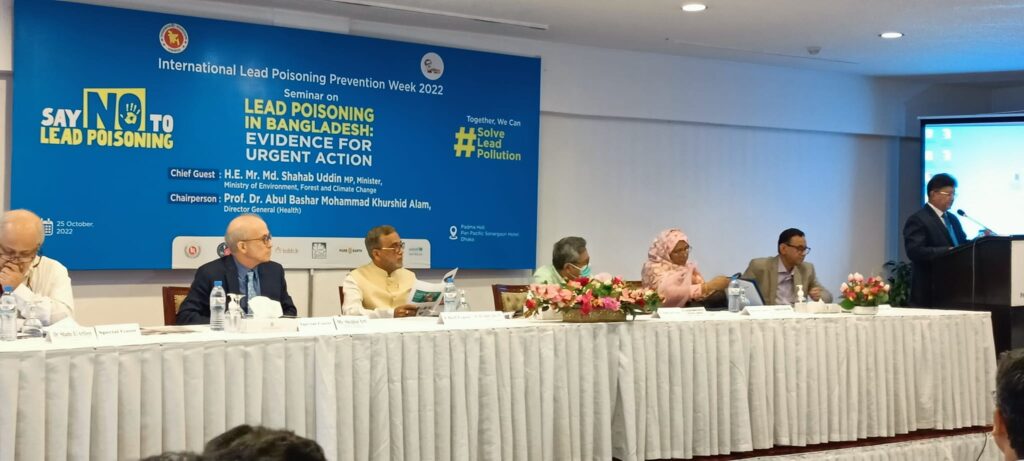
As part of the International Lead Poisoning Prevention, Week 2022 Observance program- the Directorate General of Health Services (DGHS) and UNICEF Bangladesh have jointly organized a national seminar in collaboration with IEDCR, Icddr’b, ESDO, and Pure Earth. The title of the seminar is “Lead Poisoning in Bangladesh: Research Evidence for Urgent Action.”

Research findings on different areas of lead poisoning in Bangladesh including ESDO have been shared aiming to draw the attention of the policymakers for necessary actions.
International Lead Poisoning Prevention Week 2022 ESDO

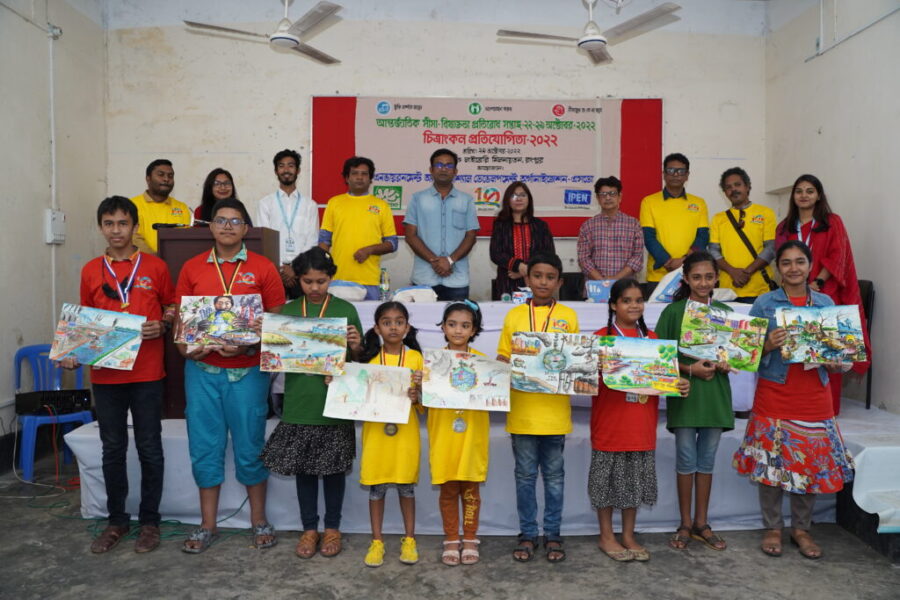
Art Competition to Observe International Lead Poisoning Prevention Week 2022

Along with rallies and collaborating in the national seminar, ESDO also organized an art competition today at the Public Library Auditorium, Rangpur. The objective of this art competition was to create public awareness of the harmful effects of lead poisoning, to highlight the efforts of countries and partners to prevent lead exposure, particularly in children, to involve youth in a better understanding of the harmful effects of lead poisoning, and to urge further action to eliminate lead paint through regulatory action at the country level.

International Lead Poisoning Prevention Week (ILPPW)- 2023

End Childhood Lead Poisoning

The eleventh International Lead Poisoning Prevention Week (ILPPW) will take place on October 22–28, 2023

This year’s campaign, “End Childhood Lead Poisoning,” highlights the critical need for action to protect children from the dangers of lead exposure. It calls on governments, civil society organizations, health partners, industry, and others to address these unacceptable risks. Building on the success of banning lead in gasoline and the progress many countries have made in enacting laws to limit lead in paint, the campaign emphasizes the importance of safeguarding children in their homes, schools, and playgrounds.

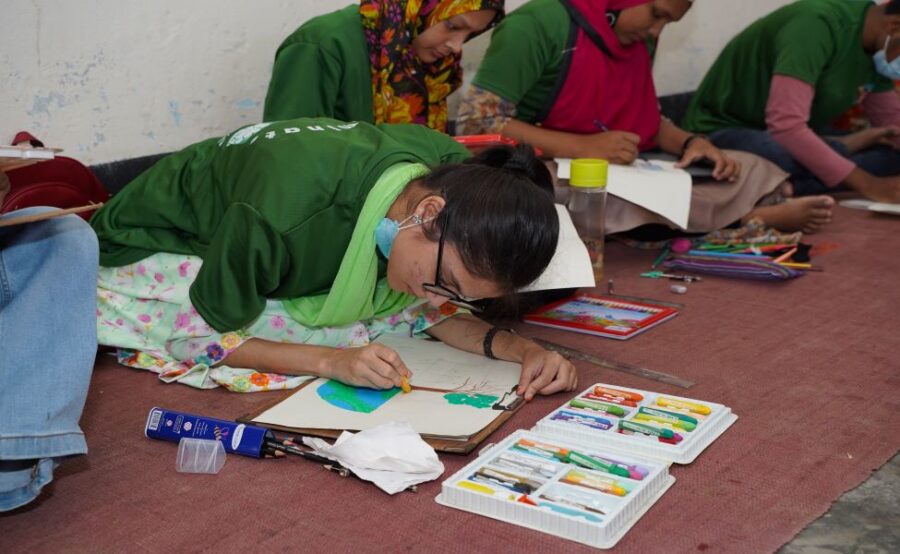
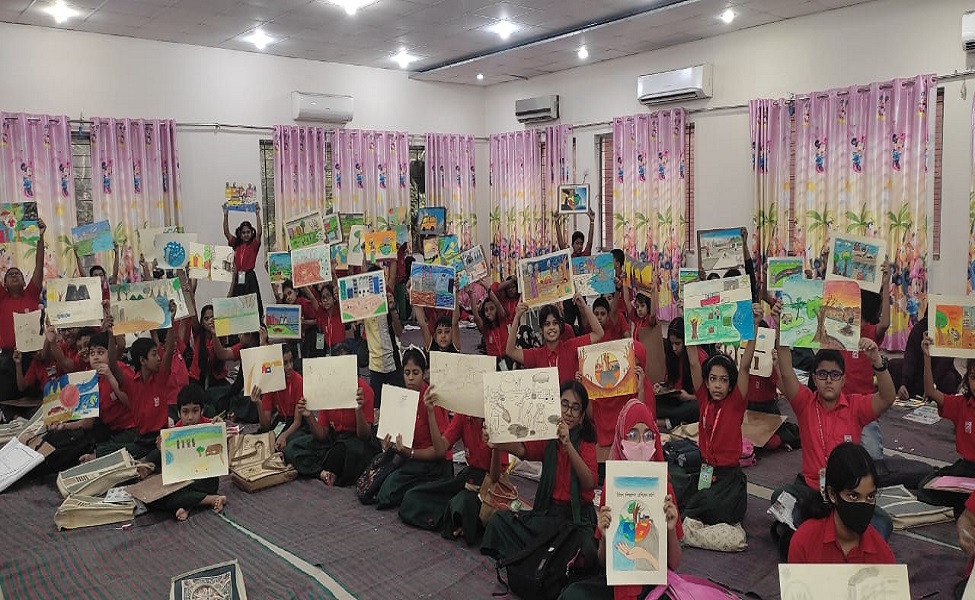
Art Competition in Collaboration with Shishu Academy to Observe the 11th International Lead Poisoning Prevention Week (ILPPW) 2023

To observe the 11th International Lead Poisoning Prevention Week (ILPPW) 2023, Environmental and Social Development Organization (ESDO), in collaboration with Bangladesh Shishu Academy, organized an art competition at the Bangladesh Shishu Academy. Approximately 100 students from three different age groups participated in this event, with the primary goal of raising awareness about the serious health risks associated with lead exposure, particularly for children.

This art competition served as a platform for young talents to express their creativity and knowledge, emphasizing the importance of preventing lead poisoning. Through their artwork, the children and participants conveyed compelling messages advocating for safer environments, lead-free products, and increased public awareness. The event exemplified a collective commitment to safeguard the well-being of future generations and promote a world free from lead contamination.
You are currently viewing ESDO commences the 11th International Lead Poisoning Prevention Week (ILPPW) 2023 by Organizing an Art Competition in Collaboration with Shishu Academy

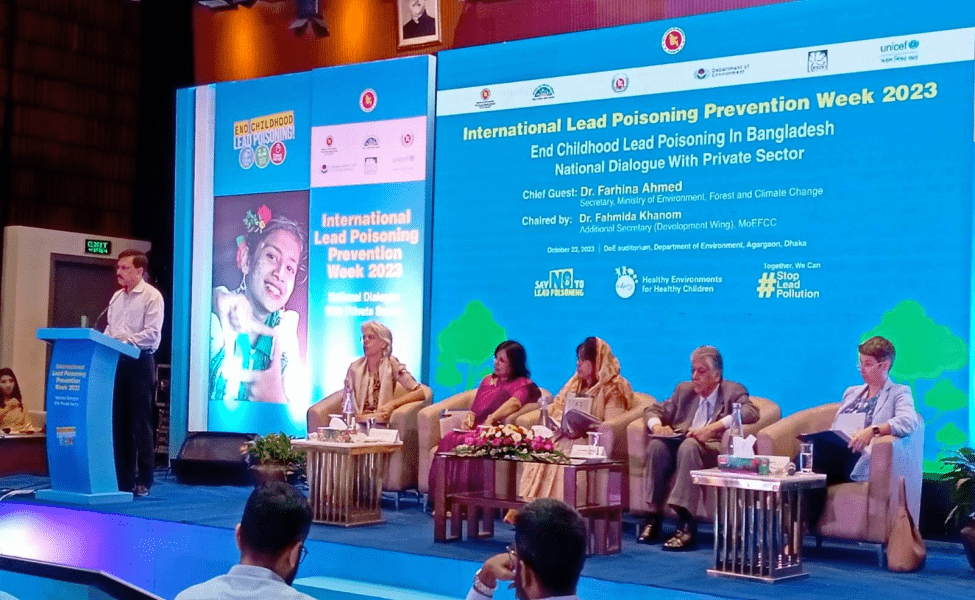
National Policy Dialogue with Private Sectors to Observe International Lead Poisoning Prevention Week (ILPPW) 2023

National Policy Dialogue with Private Sector

International Lead Poisoning Prevention Week 2023: Leading the Change—Youth Pave the Way to a Lead-Free Future

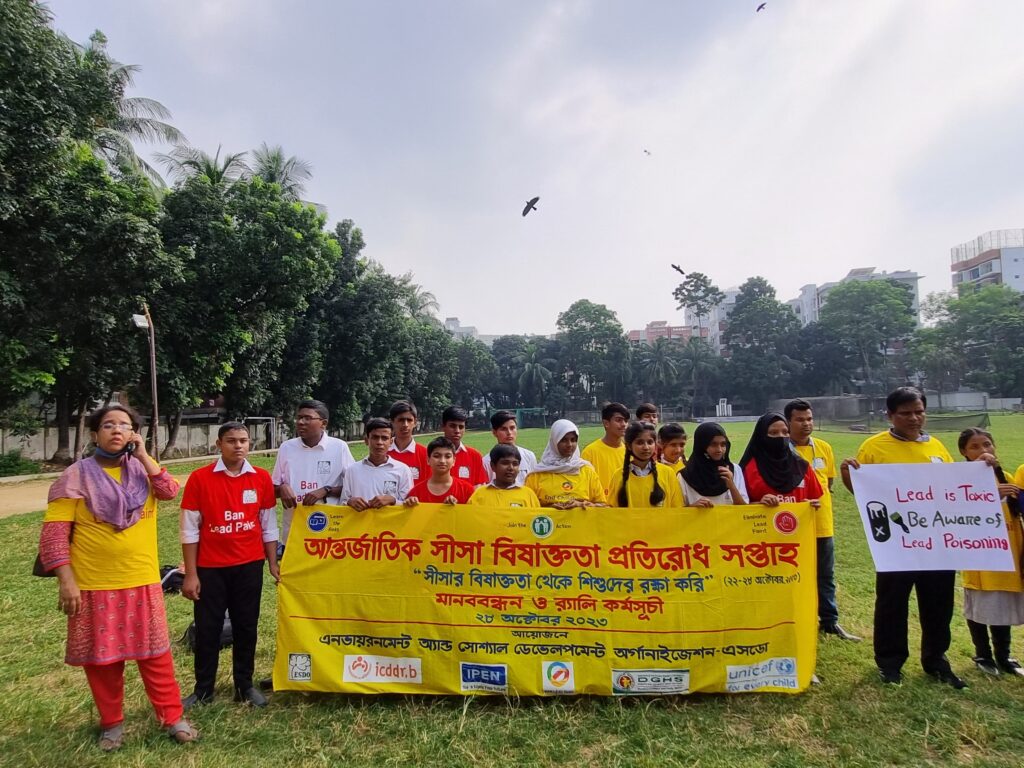
On October 30, 2023, the Environment and Social Development Organization -ESDO organized a human chain and rally in collaboration with the DGHS, ICDDR, B, IEDCR, UNICEF, Nippon Paint and IPEN to observe International Lead Poisoning Prevention Week (ILPPW)-2023. This event, co-led by the World Health Organization (WHO) and the UN Environment Program (UNEP), aims to shed light on the critical issue of lead exposure and its detrimental effects on public health, with a special focus on safeguarding the health of our children.

The theme for this year’s ILPPW campaign was “End Childhood Lead Poisoning” serving as a remarkable reminder to governments, civil society organizations, health partners, and industries of the threatening risks associated with lead exposure and the urgency of taking action to protect the well-being of our children. Lead exposure poses a significant and unacceptable threat to public health, especially for our young ones, and it is imperative that we address this issue with the utmost urgency.

Volunteers from Lalmatia Housing Society School and College shout out to ban all lead-based paint and products in Bangladesh and various partners came together in solidarity, standing united against lead poisoning. The rally started from the Lamatia Housing Society School and College and eventually moved as a rally towards the Lalmatia area. The event also consisted of representatives from the Government, UNICEF and journalists from different print and electronic media.

They voiced a clear and compelling demand for a complete ban on lead-based paint production in the country. The youth of Bangladesh, through this rally, showcased their unwavering commitment to public health and their resolve to create a lead-free environment for everyone. Their united front sent a conclusive message to all: “Lead poisoning is unacceptable and can be prevented through collective action.”

International Lead Poisoning Prevention Week (ILPPW) serves as a crucial platform for raising awareness about the widespread availability of lead paint and the alarming consequences of lead exposure. Every year, the last week of October is dedicated to this cause, as the world unites to combat lead poisoning and ensure a healthier and safer future for our children.

International Lead Poisoning Prevention Week (ILPPW) – 2024

Bright Futures Begin Lead-Free

The International Lead Poisoning Prevention Week (ILPPW) 2024 was observed from 20–26 October 2024, bringing together government institutions, development partners, civil society, and youth to address the pressing issue of lead exposure in Bangladesh. Organized by ESDO in collaboration with UNICEF Bangladesh and partners, the campaign emphasized the urgent need for stronger policies, increased awareness, and collective action to protect public health.

Human Chain and Youth Rally

The week commenced with a human chain and youth-led rally, engaging over 120 participants who marched from the Bangladesh National Museum to the Central Shaheed Minar. Through banners, slogans, and public engagement, the rally successfully captured media and public attention, amplifying calls for banning lead-containing products and promoting a lead-free future. The event highlighted the powerful role of youth in driving awareness and advocacy.


Report Launch on Lead in Children’s Products

A key highlight of the week was the launch of ESDO’s report on lead in children’s products, which revealed alarming levels of contamination in toys and everyday items. The findings exposed significant regulatory gaps and underscored the urgent need for stronger enforcement, improved safety standards, and enhanced monitoring systems. The event brought together policymakers, industry representatives, and experts to discuss evidence-based solutions.


Policy Workshop on Lead Legislation

The policy workshop convened key stakeholders to discuss strengthening legislation and regulatory frameworks for lead poisoning prevention. Discussions focused on enforcement challenges, institutional coordination, and the need for comprehensive policies covering multiple exposure sources. The workshop generated actionable recommendations and contributed to advancing policy dialogue toward a lead-free Bangladesh.


Youth Voices for a Lead-Free Future

The week concluded with the “Youth Voices for a Lead-Free Future” event, providing a platform for young people to engage in discussions, exhibitions, and advocacy activities. Youth participants shared their perspectives, presented creative expressions, and called for stronger policy enforcement. The event reinforced youth as key agents of change in promoting a healthier, toxin-free environment.


International Lead Poisoning Prevention Week (ILPPW) – 2025

No Safe Level; Act Now to End Lead Exposure

The International Lead Poisoning Prevention Week (ILPPW) 2025 was observed from 19–25 October 2025, bringing together government agencies, development partners, civil society, media, and youth to address the urgent public health crisis of lead exposure in Bangladesh. Organized by ESDO in collaboration with UNICEF Bangladesh and the Lead Exposure Elimination Project (LEEP), the campaign emphasized that there is no safe level of lead exposure and called for immediate policy action, stronger enforcement, and increased public awareness.

Youth Rally and Human Chain

The week commenced with a youth rally and human chain on 18 October, engaging over 150 participants from youth organizations, scouts, and civil society groups. The rally, held from the Bangladesh National Museum to the High Court, used banners, slogans, and public engagement to demand stricter enforcement of lead regulations and a complete ban on lead-containing products. The event generated strong media coverage and positioned youth as powerful advocates driving awareness and policy momentum.


Art for Change: Open Forum and Discussion on Lead-Safe Paints


A key youth engagement event, “Art for Change,” was held at the Faculty of Fine Arts, University of Dhaka, with participation from around 150 students. The event combined open discussions, expert sessions, and creative exhibitions to raise awareness among young artists about the dangers of lead in paints. Students actively engaged in dialogue, explored safer alternatives, and were encouraged to use their creative platforms to advocate for lead-free practices, reinforcing youth leadership in environmental advocacy.

Press Briefing and Report Launch

The press briefing and report launch presented findings from ESDO’s national study on lead in decorative paints. The study revealed that 42% of tested samples exceeded the legal limit, with extremely high concentrations found in some cases. The event brought together BSTI officials, industry representatives, policymakers, and media to discuss regulatory gaps, enforcement challenges, and the urgent need for industrial paint standards. Media engagement played a crucial role in amplifying findings and strengthening accountability.

Social Media Campaign
Throughout the week, a dynamic social media campaign was conducted across Facebook, Instagram, LinkedIn, and YouTube. The campaign featured awareness posts, educational content, infographics, short reels, and event highlights, effectively reaching a wide audience. By combining digital storytelling with real-time updates, the campaign significantly increased public engagement and extended the impact of ILPPW 2025 beyond physical events.

UNICEF Bangladesh & ESDO's Joint Initiative "Addressing Children’s Environmental Health with a particular focus on Lead Poisoning in Bangladesh"

The joint initiative by ESDO and UNICEF, “Addressing Children’s Environmental Health with a Particular Focus on Lead Poisoning in Bangladesh,” addresses the alarming issue of lead contamination that poses severe health risks, especially to children. With Bangladesh ranking fourth globally in lead-related fatalities, the project targets industries like paints and batteries, where lead exposure remains rampant, and informal recycling practices exacerbate the issue. The initiative spans from December 2023 to December 2025, aiming to reduce lead exposure through regulatory reforms, industry engagement, and public awareness.

Objectives: The project focuses on analyzing existing policies, identifying gaps, and implementing solutions to mitigate lead poisoning.

Key goals include:
Reforming VAT and tax structures to incentivize lead-free practices. Establishing comprehensive standards for industrial paints (below 90 ppm lead content).
Enhancing occupational safety and health (OSH) standards in the used lead-acid battery (ULAB) recycling sector. Formalizing informal recycling practices to reduce environmental and health hazards. Conducting awareness campaigns and capacity-building workshops to influence policymakers and stakeholders.

Key Activities: Research and Policy Development:
Desk reviews, Key Informant Interviews (KIIs), and Focus Group Discussions (FGDs) to assess gaps in policies and industry practices. Develop draft legislation and tax reform proposals through consultation workshops.

Standards and Compliance: Create roadmaps for implementing and monitoring industrial paint standards. Analyze the lead demand-supply chain and propose strategies to formalize informal recycling sectors.
Stakeholder Engagement: Host workshops with government, industry, and civil society to align on policy recommendations. Convene media roundtables and journalist training sessions to increase awareness.
Community Awareness: Conduct grassroots campaigns to educate workers, communities, and businesses on lead risks.
Organize capacity-building programs for regulators and industries.

Outcomes:
Analytical report on VAT and tax schemes for lead-containing products prepared, finalized and submitted. Draft legislation act on tax/reforms on lead-containing products prepared and submitted. Study report on landscape analysis on existing legislation, policies, and standards on lead poisoning submitted and finalized. Policy brief on landscape analysis on lead poisoning standards and legislation finalized and submitted. A draft guideline on paint
regulation has been prepared and submitted to BSTI. Successfully conducted around 30 KIIs, 20 FGDs and 10 consultation workshops with relevant stakeholders. Achieved social media reach about 2.63 million till now.

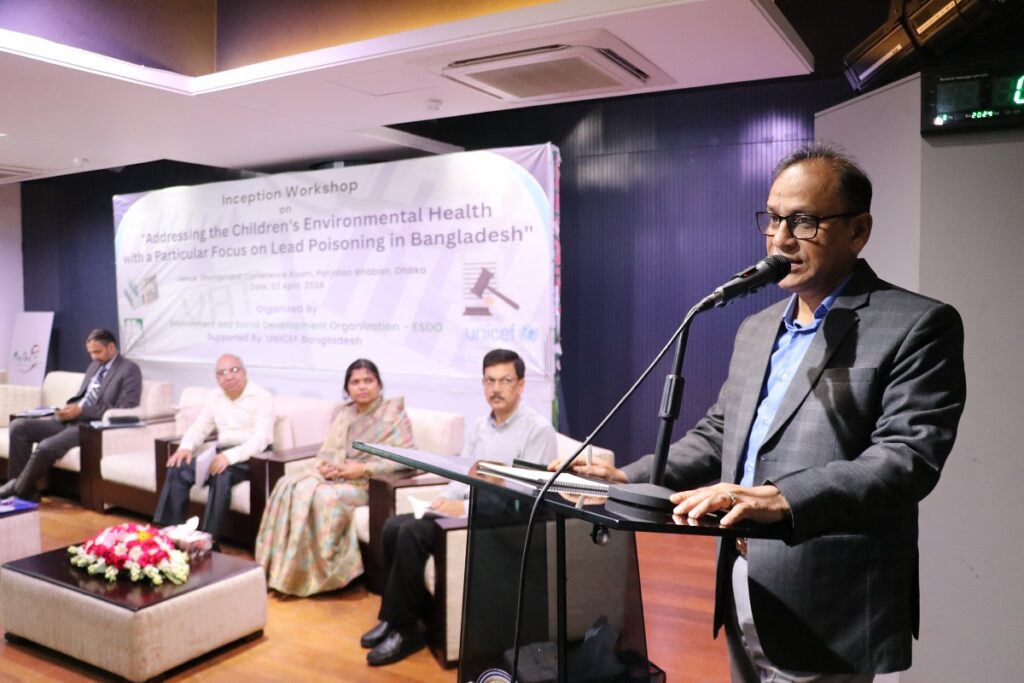
Inception Workshop
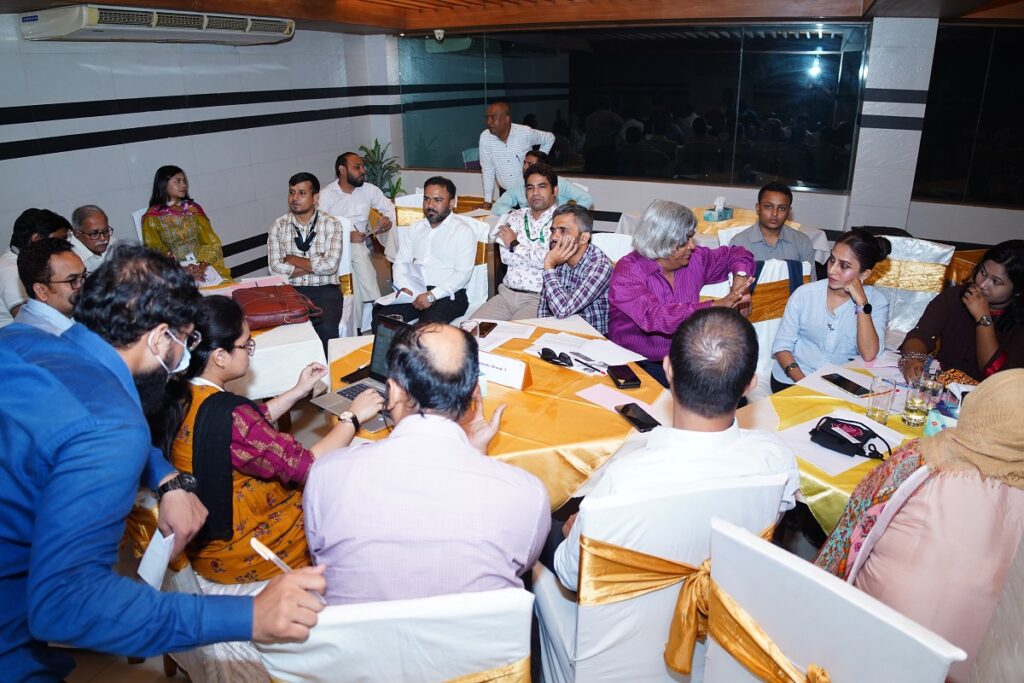
ULAB Workshop
Workshop with Workers and Community
Workshop on industrial paint

Assessing Lead in Paints in Bangladesh: Evidence for Policy Action and Market Transformation

ESDO, in collaboration with Instiglio and the Lead Exposure Elimination Project (LEEP), implemented a comprehensive study to assess the current status of lead in paints across Bangladesh. The project combined desk review, market surveys, key informant interviews, and laboratory analysis to generate robust evidence on compliance with the national 90 ppm lead standard. A total of 161 paint samples were collected from major markets in Dhaka and Chattogram and analyzed at an internationally accredited laboratory using ICP-OES following NIOSH 7303 method .

The findings revealed that 42% of tested paints exceeded the national limit, with significantly higher concentrations observed in certain locally available and imported products. While major manufacturers demonstrated strong compliance, gaps remain among smaller and informal producers, as well as in unregulated paint categories such as industrial and spray paints. The study also identified low levels of labeling (21.6%) and limited awareness among retailers, alongside the widespread use of industrial paints for decorative purposes, highlighting critical regulatory and enforcement challenges.

Objectives:

To assess the current compliance of paints in Bangladesh with the 90 ppm lead standard, with particular focus on local and small-scale manufacturers, while identifying market practices, regulatory gaps, and exposure risks to inform policy improvement and enforcement actions.

Methodology

The study adopted a mixed-method approach, combining desk review, key informant interviews (KII), stakeholder consultations, and market surveys to understand both regulatory and market dynamics. Field data were collected from major paint markets in Dhaka and Chattogram, covering retailers, distributors, and manufacturers.

A total of 161 paint samples—including decorative, industrial, and spray paints—were systematically collected based on brand popularity, color variation, and product type. Samples were prepared on a dry-weight basis and analyzed at an internationally accredited laboratory (WOHL) using ICP-OES following the NIOSH 7303 method. The results were then compared against the BSTI 90 ppm standard to determine compliance levels and identify patterns across color, type, and origin.

Major Outcomes and Results:

The project generated key outputs including a national study report, policy recommendations, stakeholder engagement outcomes, and media dissemination, contributing to increased awareness and policy dialogue on lead exposure.

  • 42% of paint samples (68 out of 161) exceeded the national standard of 90 ppm lead, confirming ongoing market presence of non-compliant products.
  • High lead concentrations were detected in several samples, with levels reaching up to 190,000 ppm, indicating the continued use of lead-based pigments.
  • Large and multinational manufacturers were found to be largely compliant, demonstrating significant progress following the 2018 regulation.
  • Spray and industrial paints exhibited high levels of non-compliance and remain outside current regulatory coverage, posing additional exposure risks.
  • Only 21.6% of products carried “lead-free” or similar labels, with cases of misleading labeling identified.
  • Retailer awareness was low, with more than half of sellers unaware of the national lead standard and compliance status.
  • Industrial paints are commonly used for decorative purposes, increasing the risk of household exposure.
  • The findings confirm a two-tier market system—compliant major brands and a smaller but significant informal segment supplying high-lead paints.

Dissemination and Follow-up Actions

The findings of the study were formally disseminated through a national press briefing, engaging media representatives, policymakers, and key stakeholders, including officials from BSTI and the Department of Environment. The briefing helped bring national attention to the issue of lead in paints and strengthened dialogue between regulators, industry, and civil society.

Following the dissemination, BSTI conducted independent follow-up testing in their own laboratories, demonstrating increased regulatory interest and response. Building on this momentum, ESDO, with support from Instiglio and LEEP, is now advancing next steps for continued engagement with BSTI, focusing on strengthening monitoring and enforcement mechanisms, as well as initiating targeted engagement with non-compliant manufacturers to support transition toward safer, lead-free production practices.

Esdo Dhrubo