Environmental Education camp - ESDO
Plastic Free Campus - ESDO
Background
Plastic is a miracle material, shaped and folded into our lives in everything from Cigarette filters to medical tubing and cutleries to cars. Even though plastic is found in the toys we give our children, the food we eat, and the clothing we wear, we don’t care about the environmental and public health hazards caused by plastic. In the 1950s, the world produced 2 million metric tons of the stuff annually, according to the UN Environment Program. Now, the amount has risen to more than 400 million metric tons. If current production stays on track, plastic yearly production could reach 1.1 billion metric tons by 2050 (UNEP). At the same time, ESDO has been pioneering in banning plastic since 2002 in Bangladesh.
The convenience of plastic comes at a terrible environmental cost. According to the Organization for Economic Co-operation and Development, plastic was responsible for 1.8 billion metric tons of greenhouse gas emissions in 2019. That’s 3.4% of the global total, more than the percentage of CO2 contributed by the aviation sector or emissions from all the rice grown worldwide. Plastic’s share is set to increase in the coming years. Approximately 2.7 billion metric tons of CO2 could be emitted annually from plastic production and incineration by 2050, according to the Center for International Environmental Law Report 2019.
Project Introduction
Plastic production requires various chemical additives, but all plastics are derived from fossil fuels. Every stage of their life cycle emits pollution that contributes to global warming. Plastics are made from oil and gas, and their production emits greenhouse gases into the atmosphere. Plastic is not biodegradable and breaks down into microplastics that remain in the environment for thousands of years. Millions of sea and land creatures are killed or injured eating plastics every year, and these plastics are now everywhere: in our food, drinks, nature, and all over the world. Food and drink packaging made from plastic often contains harmful chemical additives.
Considering the global environment protection issue, Environment and Social Development Organization – ESDO in association with the Mutual Trust Bank Limited – MTBL, Bangladesh; Plastic Solution Funds (PSF); and Break Free From Plastic (BFFP) have designed the “Plastic Free Campus (PFC)” project to help school children to combat single-use plastic pollution in Bangladesh. Through this project, ESDO & partners plan to include ten schools in five Bangladesh divisions: Dhaka, Rajshahi, Khulna, Sylhet, and Rangpur. This project was launched through an inception workshop on January 22, 2033, at Lakeshore Hotel, Gulshan, Dhaka.
Goals and Objectives of ESDO
- Develop a second generation of environmental leaders
- Inform the younger generation about plastic pollution
- Train them to reject single-use plastics
- Additionally, start living a waste-free lifestyle from home to school and create a plastic-free campus
Target Population
- Teachers
- Volunteers (Girls Guides & Boys Scouts)
- Students (from Class 3 to 8)
Key Activities of ESDO
- Providing Training to the teachers and volunteers
- Training young students about plastic-free living
- Education Material Development for both teachers and target students
- Initiate a refusing plastic campaign among schools in various districts
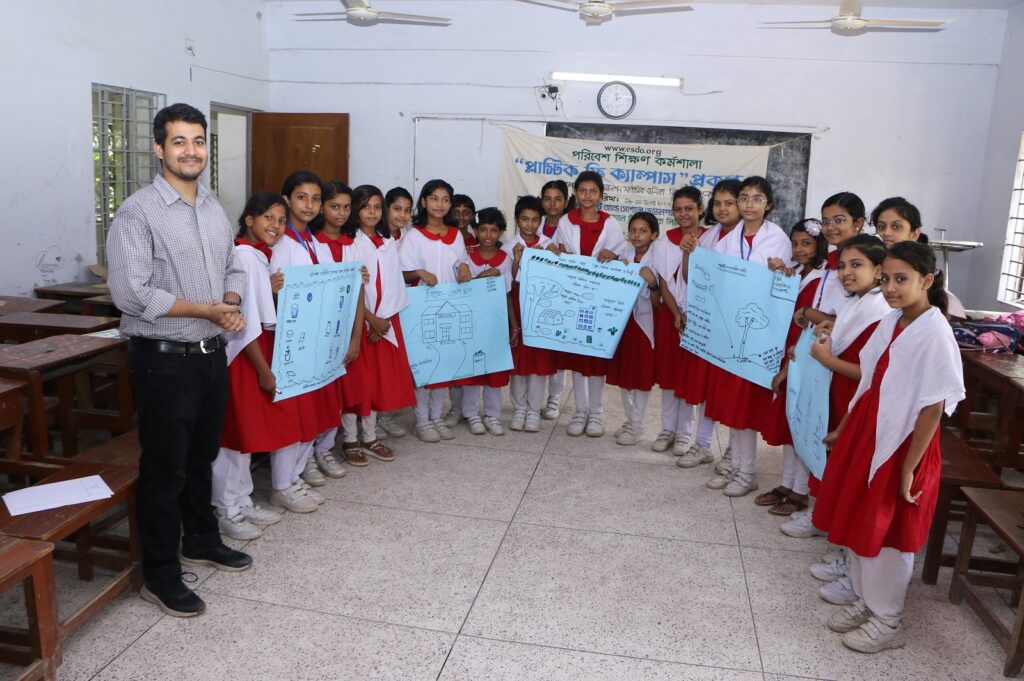
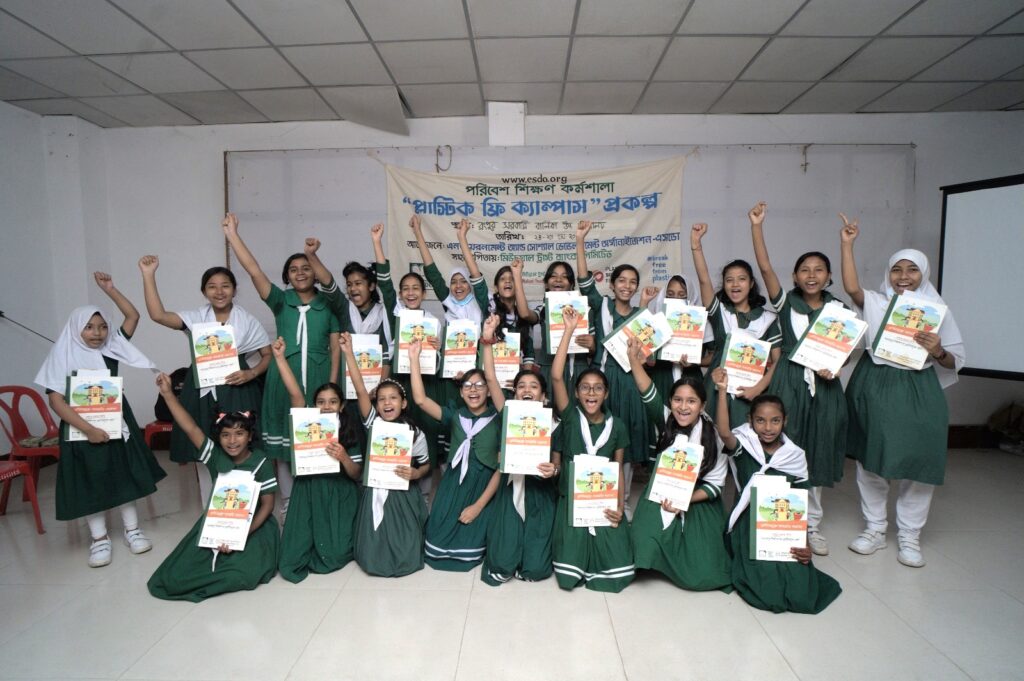
- Conducting environmental education camp
- Initiate plastic waste segregation on school campuses
- Two steps quarterly assessment process
- Formation of a Green Club in each school
- Best performer award approach
- Provide assigned tasks for students on Zero waste lifestyle and assess their performance
- Graduation Ceremony at all divisional levels
- National Zero Waste Olympiad
- Maintain a close follow-up with the students through the Green Clubs