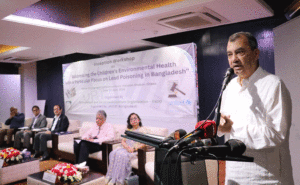

On 1st February, The Ministry of Environment, Forest and Climate Change (MoEFCC), in partnership with UNICEF Bangladesh,ESDO and Pure Earth successfully convened the 𝐅𝐢𝐧𝐚𝐥 𝐂𝐨𝐧𝐬𝐮𝐥𝐭𝐚𝐭𝐢𝐨𝐧 𝐖𝐨𝐫𝐤𝐬𝐡𝐨𝐩 𝐨𝐧 𝐭𝐡𝐞 𝐍𝐚𝐭𝐢𝐨𝐧𝐚𝐥 𝐒𝐭𝐫𝐚𝐭𝐞𝐠𝐲 𝐟𝐨𝐫 𝐚 𝐋𝐞𝐚𝐝-𝐅𝐫𝐞𝐞 𝐁𝐚𝐧𝐠𝐥𝐚𝐝𝐞𝐬𝐡 𝐚𝐧𝐝 𝐭𝐡𝐞 𝐌𝐮𝐥𝐭𝐢-𝐘𝐞𝐚𝐫 𝐀𝐜𝐭𝐢𝐨𝐧 𝐏𝐥𝐚𝐧 (𝟐𝟎𝟐𝟓–𝟐𝟎𝟑𝟓) at the Department of Environment (DoE) Auditorium, Poribesh Bhaban, Agargaon, Dhaka.
The workshop was graced by the 𝐇𝐨𝐧𝐨𝐮𝐫𝐚𝐛𝐥𝐞 𝐂𝐡𝐢𝐞𝐟 𝐆𝐮𝐞𝐬𝐭, 𝐃𝐫. 𝐅𝐚𝐫𝐡𝐢𝐧𝐚 𝐀𝐡𝐦𝐞𝐝, 𝐒𝐞𝐜𝐫𝐞𝐭𝐚𝐫𝐲, 𝐌𝐨𝐄𝐅𝐂𝐂. The session was attended by distinguished Special Guests, including 𝐌𝐝. 𝐙𝐢𝐚𝐮𝐥 𝐇𝐚𝐪𝐮𝐞, 𝐀𝐝𝐝𝐢𝐭𝐢𝐨𝐧𝐚𝐥 𝐃𝐢𝐫𝐞𝐜𝐭𝐨𝐫 𝐆𝐞𝐧𝐞𝐫𝐚𝐥, 𝐃𝐞𝐩𝐚𝐫𝐭𝐦𝐞𝐧𝐭 𝐨𝐟 𝐄𝐧𝐯𝐢𝐫𝐨𝐧𝐦𝐞𝐧𝐭 (𝐃𝐨𝐄). Special Guest remarks were also delivered on behalf of UNICEF’s health leadership from 𝐃𝐫. 𝐏𝐫𝐢𝐬𝐜𝐢𝐥𝐥𝐚 𝐖𝐨𝐛𝐢𝐥. The session was chaired by 𝐃𝐫. 𝐅𝐚𝐡𝐦𝐢𝐝𝐚 𝐊𝐡𝐚𝐧𝐨𝐦, 𝐀𝐝𝐝𝐢𝐭𝐢𝐨𝐧𝐚𝐥 𝐒𝐞𝐜𝐫𝐞𝐭𝐚𝐫𝐲 (𝐄𝐧𝐯𝐢𝐫𝐨𝐧𝐦𝐞𝐧𝐭 𝐖𝐢𝐧𝐠), 𝐌𝐨𝐄𝐅𝐂𝐂, and the technical presentation was delivered by 𝐃𝐫. 𝐌𝐨𝐡𝐚𝐦𝐦𝐚𝐝 𝐄𝐧𝐚𝐲𝐞𝐭 𝐇𝐨𝐬𝐬𝐚𝐢𝐧, 𝐂𝐨𝐧𝐬𝐮𝐥𝐭𝐚𝐧𝐭.
A diverse group of participants joined the consultation, including representatives from MoEFCC and DoE, relevant line ministries and government agencies, development partners, civil society and non-government organizations, academic and research institutions, and private sector associations. Their presence ensured strong multi-sector engagement and a shared commitment to preventing lead exposure and safeguarding public health—especially the health and development of children.
The objectives of the consultation were to review the near-final draft of the national strategy and the multi-year action plan, ensure coherence and practical feasibility across priority areas, confirm governance and coordination arrangements among key institutions, and gather final technical inputs to strengthen implementation readiness and support the endorsement pathway.
As outcomes, the workshop generated consolidated recommendations through plenary discussions and group work to refine the strategy and action plan for 2025–2035, reinforced the importance of coordinated multi-sector action for monitoring, enforcement, and prevention, and strengthened shared ownership among participating institutions for moving forward with finalization, endorsement, and effective rollout.
Together, we move closer to a safer, healthier future for children and communities—towards a Lead-Free Bangladesh.