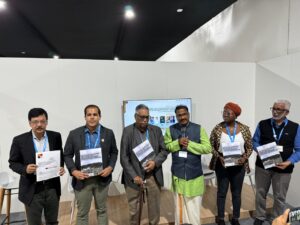

ESDO, in collaboration with Instiglio and the Lead Exposure Elimination Project (LEEP), implemented a comprehensive study to assess the current status of lead in paints across Bangladesh. The project combined desk review, market surveys, key informant interviews, and laboratory analysis to generate robust evidence on compliance with the national 90 ppm lead standard. A total of 161 paint samples were collected from major markets in Dhaka and Chattogram and analyzed at an internationally accredited laboratory using ICP-OES following NIOSH 7303 method .
The findings revealed that 42% of tested paints exceeded the national limit, with significantly higher concentrations observed in certain locally available and imported products. While major manufacturers demonstrated strong compliance, gaps remain among smaller and informal producers, as well as in unregulated paint categories such as industrial and spray paints. The study also identified low levels of labeling (21.6%) and limited awareness among retailers, alongside the widespread use of industrial paints for decorative purposes, highlighting critical regulatory and enforcement challenges.
Objectives:
To assess the current compliance of paints in Bangladesh with the 90 ppm lead standard, with particular focus on local and small-scale manufacturers, while identifying market practices, regulatory gaps, and exposure risks to inform policy improvement and enforcement actions.
Methodology
The study adopted a mixed-method approach, combining desk review, key informant interviews (KII), stakeholder consultations, and market surveys to understand both regulatory and market dynamics. Field data were collected from major paint markets in Dhaka and Chattogram, covering retailers, distributors, and manufacturers.
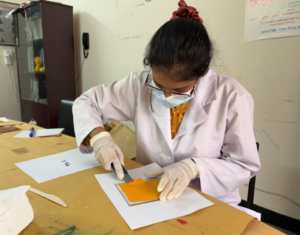
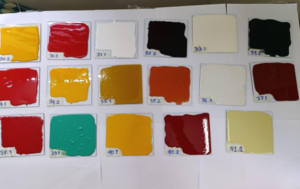
A total of 161 paint samples—including decorative, industrial, and spray paints—were systematically collected based on brand popularity, color variation, and product type. Samples were prepared on a dry-weight basis and analyzed at an internationally accredited laboratory (WOHL) using ICP-OES following the NIOSH 7303 method. The results were then compared against the BSTI 90 ppm standard to determine compliance levels and identify patterns across color, type, and origin.
Major Outcomes and Results:
The project generated key outputs including a national study report, policy recommendations, stakeholder engagement outcomes, and media dissemination, contributing to increased awareness and policy dialogue on lead exposure.
- 42% of paint samples (68 out of 161) exceeded the national standard of 90 ppm lead, confirming ongoing market presence of non-compliant products.
- High lead concentrations were detected in several samples, with levels reaching up to 190,000 ppm, indicating the continued use of lead-based pigments.
- Large and multinational manufacturers were found to be largely compliant, demonstrating significant progress following the 2018 regulation.
- Spray and industrial paints exhibited high levels of non-compliance and remain outside current regulatory coverage, posing additional exposure risks.
- Only 21.6% of products carried “lead-free” or similar labels, with cases of misleading labeling identified.
- Retailer awareness was low, with more than half of sellers unaware of the national lead standard and compliance status.
- Industrial paints are commonly used for decorative purposes, increasing the risk of household exposure.
- The findings confirm a two-tier market system—compliant major brands and a smaller but significant informal segment supplying high-lead paints.and Follow-up Actions
The findings of the study were formally disseminated through a national press briefing, engaging media representatives, policymakers, and key stakeholders, including officials from BSTI and the Department of Environment. The briefing helped bring national attention to the issue of lead in paints and strengthened dialogue between regulators, industry, and civil society.
Following the dissemination, BSTI conducted independent follow-up testing in their own laboratories, demonstrating increased regulatory interest and response. Building on this momentum, ESDO, with support from Instiglio and LEEP, is now advancing next steps for continued engagement with BSTI, focusing on strengthening monitoring and enforcement mechanisms, as well as initiating targeted engagement with non-compliant manufacturers to support transition toward safer, lead-free production practices.